There’s a point many hotel groups eventually reach where the accounting system that once felt “good enough” starts creating more friction than confidence.
Not because it stopped working.
But because the business outgrew what the system was designed to support.
Reports take longer to generate.
Teams rely on exports and spreadsheets to answer basic questions.
Leadership meetings become filled with reconciliation instead of strategy.
And slowly, the system that was supposed to create visibility becomes another operational bottleneck.
For many hotel groups, that realization is what starts the conversation around moving away from legacy accounting platforms like M3.
Not because M3 failed the industry.
Because the industry changed.

The Legacy System Problem Isn’t Usually Obvious
Most legacy hotel accounting systems don’t break dramatically.
They accumulate friction gradually.
At first, the inefficiencies feel manageable:
• An extra login here
• A manual export there
• A reconciliation workaround at month-end
Individually, none of it feels urgent.
But as hotel groups grow, those small inefficiencies begin stacking on top of each other.
And eventually leadership starts noticing something important:
The accounting team spends more time managing the system than analyzing the business.
✅ Pro Tip: Legacy systems rarely become a problem overnight. They become a problem when growth exposes the operational drag underneath them.
What Hotel Groups Actually Want Today
The expectations around hotel operations have changed dramatically over the last few years.
Ownership groups want faster visibility.
Operators want cleaner labor insight.
Finance teams want fewer manual processes.
Leadership wants portfolio-level clarity without waiting weeks for reconciliation.
But many older accounting platforms were built around a different operating model:
Monthly reporting.
Departmental silos.
Disconnected workflows.
That worked when hotel groups were smaller and operational speed mattered less.
Today, it creates lag.

A Scenario Many M3 Users Recognize
Consider a growing hotel management company operating branded properties across several markets.
The accounting process technically works.
Month-end closes happen.
Reports eventually get delivered.
Teams know the workflows.
But internally, everyone knows the friction points:
• Reporting across properties takes too long
• Labor and accounting live in separate environments
• Teams jump between modules and logins constantly
• Manual exports are still part of daily operations
• Visibility depends heavily on spreadsheets and reconciliation work
Nothing feels catastrophic.
But nothing feels modern either.
Leadership starts asking bigger questions:
Why does getting a portfolio-wide answer still take this much effort?
Why do teams spend so much time translating information between systems?
Why does visibility feel delayed even when data exists?
That’s usually the moment the conversation shifts from:
“Should we replace the system?”
to:
“Can we keep scaling like this?”
The Hidden Cost of Fragmentation
One of the biggest frustrations hotel groups experience with legacy systems isn’t accounting itself.
It’s fragmentation.
Accounting exists in one place.
Labor exists somewhere else.
Reporting becomes another tool entirely.
Each system answers part of the question—but no system answers the whole thing together.
That separation creates operational blind spots.
Finance sees the numbers later.
Operations sees labor separately.
Leadership spends time stitching the story together manually.
The result is slower decision-making across the organization.
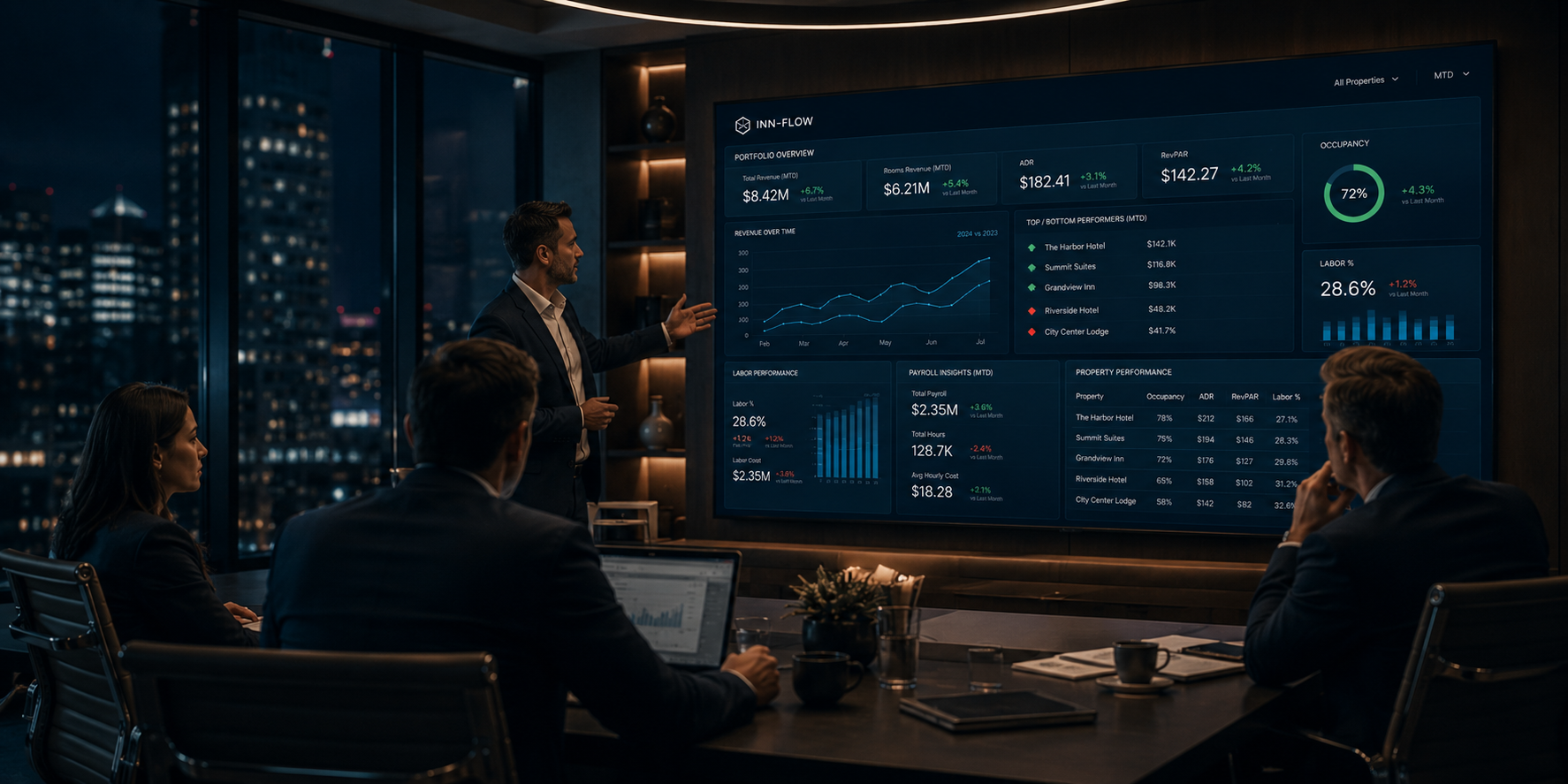
According to Inn-Flow’s comparison research, many hotel operators running M3 rely on separate products, third-party tools, and manual workarounds for labor management, reconciliation, and reporting.
And as portfolios grow, that fragmentation becomes harder to sustain.
Why Visibility Matters More Than Features
Most hotel groups evaluating a transition away from M3 aren’t actually chasing new features.
They’re chasing operational clarity.
They want:
💎 Faster portfolio-level visibility
💎 Cleaner reporting across brands
💎 Fewer manual reconciliation processes
💎 Better alignment between labor and accounting
💎 Less dependence on spreadsheets and exports
That’s a very different conversation than software shopping.
It’s really a conversation about operational infrastructure.
Because once hotel groups reach a certain size, visibility itself becomes a competitive advantage.
The Shift Toward Connected Operations
Modern hotel platforms are increasingly moving toward connected operational environments instead of isolated accounting tools.
That distinction matters.
When accounting, labor, payroll, and reporting operate together:
• Leadership gets answers faster
• Operational drift becomes easier to spot
• Managers spend less time reconciling information
• Month-end becomes less disruptive
• Portfolio-level comparisons become more consistent
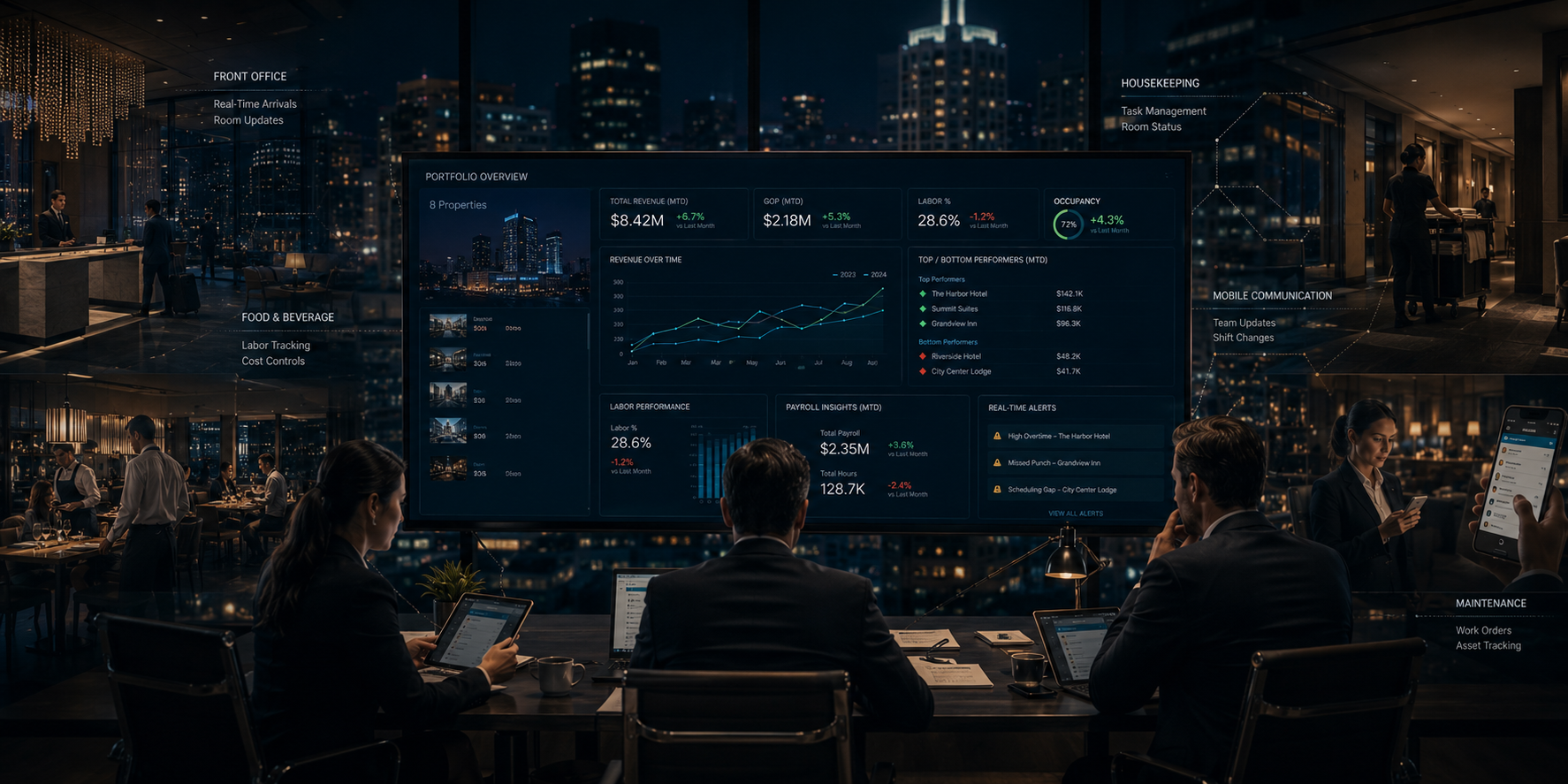
Platforms like Inn-Flow are built around this connected model—bringing accounting, labor, business intelligence, and portfolio reporting into a single operational environment rather than relying on disconnected modules and third-party workarounds.
For many hotel groups, that operational alignment becomes more valuable than any individual feature itself.
Why Timing Becomes the Real Issue
One of the clearest signs a hotel group has outgrown a legacy system is this:
The organization moves faster than the reporting environment around it.
Operations happen daily.
Labor changes hourly.
Ownership decisions happen continuously.
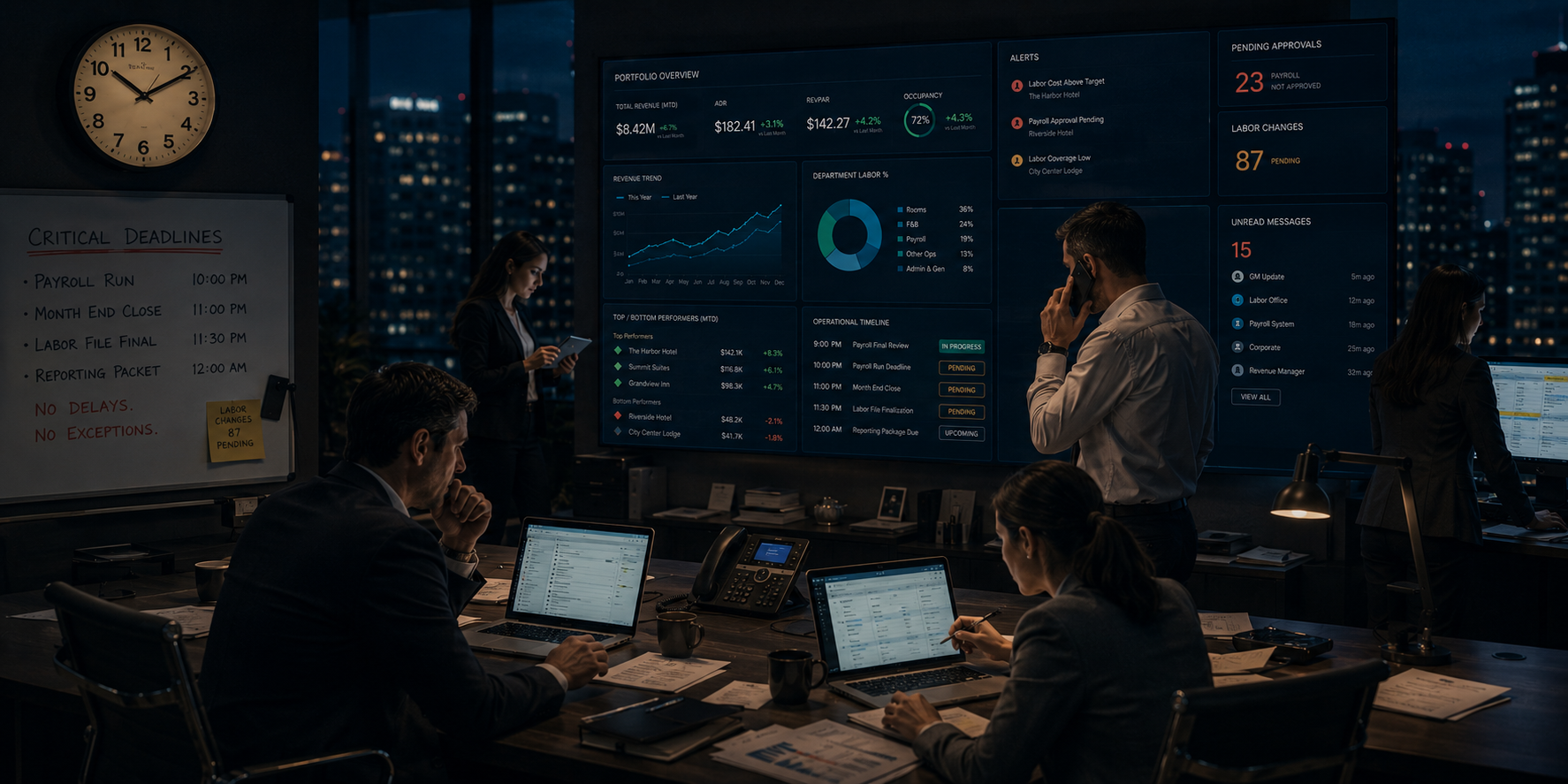
But visibility still arrives on delayed timelines.
That gap creates friction everywhere:
Finance waits on reconciliation.
Operations waits on reporting.
Leadership waits on answers.
And eventually the business starts realizing the system isn’t just supporting operations anymore.
It’s slowing them down.
✅ Pro Tip: The real cost of outdated systems isn’t usually accounting inefficiency. It’s delayed organizational clarity.
The Fear of Transition Is Real
Of course, many hotel groups stay on legacy platforms longer than they want to because switching feels risky.
Migration sounds disruptive.
Training sounds exhausting.
Historical data feels fragile.
Those concerns are valid.
But modern hospitality platforms are increasingly designed around smoother onboarding, portfolio-level migration planning, and parallel implementation support.
Inn-Flow, for example, positions migration as a structured 6–8 week process with dedicated implementation support designed specifically for hotel management companies transitioning from systems like M3.
The fear of change is understandable.
But operational drag compounds quietly over time too.
The Bottom Line | Hotel Operations Have Changed
M3 helped define hotel accounting for years.
But the expectations around hotel operations, visibility, and portfolio management have evolved.
Today’s hotel groups operate faster, manage more complexity, and expect greater alignment between operations and finance than legacy systems were originally built to support.
That doesn’t make older systems “bad.”
It simply means many growing hotel groups are reaching the point where fragmented workflows, delayed visibility, and manual reconciliation no longer scale cleanly.
The organizations moving forward aren’t necessarily chasing new software.
They’re building operational environments that create clarity faster.
Because eventually, every growing hotel group reaches the same question:
Is the system helping the business scale—or forcing the business to work around it?
✅ Pro Tip: If leadership discussions spend more time reconciling data between systems than discussing strategy, the problem may no longer be operational—it may be infrastructural.